Queen City yard · est. since drums got heavy
Every tote on our lot used to belong to someone else.
We're a scrappy, stubbornly eco IBC tote yard on N Graham St. in Charlotte. We buy the empties nobody wants, pressure-wash the honest ones, rebottle the stubborn ones, and recycle anything that can't be saved. No landfills. No middlemen. No phone number — just a real yard and real cages.
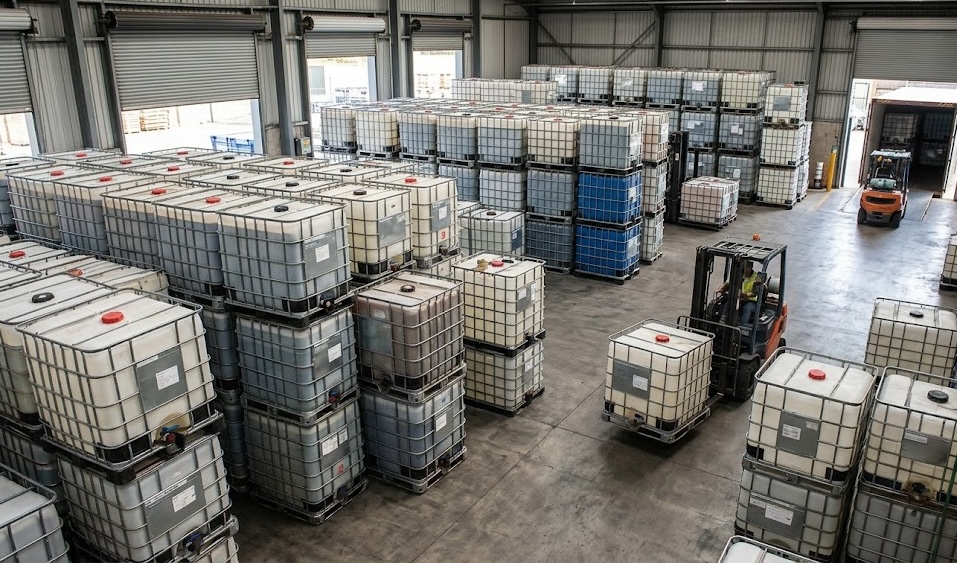
The yard floor
400+ totes on the lot at any given time.
Our 1.8-acre yard on N Graham Street holds a rotating inventory of standard, food-grade, rebottled, and specialty totes — all triaged, graded, and ready to ship. The forklift never stops.
The running ledger
Every used tote we move is roughly 137 lb of plastic and steel that doesn't have to be made from scratch.
A new 275-gallon IBC takes about 42 kg of virgin HDPE and a steel cage that emits around 310 kg CO₂e to fabricate. Reusing one cuts that by roughly 90%. Multiply it by the yard.
Running total since we started tagging every cage. Methodology on the carbon page.
What the yard does
Six jobs, one yard, zero landfills.
We buy your empties
Cash paid for used 275 & 330 gal IBCs, caged steel, and stainless. We take one or a truckload.
Learn more →We sell reconditioned totes
Pressure-washed and pressure-tested. Food-grade, rebottled, or technical — priced for any budget.
Learn more →We recycle the unsaveable
Cages get shredded for steel, bottles get ground into flake. Nothing goes to the landfill.
Learn more →We haul them
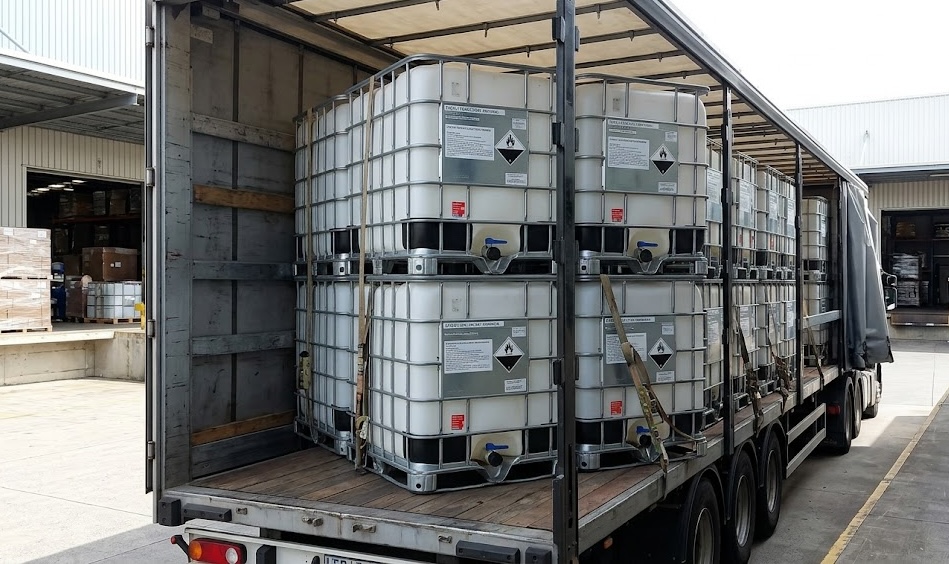
Drop-trailer within a 400-mile radius of Charlotte. Empty pickups, loaded deliveries, we balance both.
Learn more →We rebuild them
Rebottle, revalve, re-cage, and recertify. Full reconditioning to the original UN/DOT spec.
Learn more →We rework them
Rain barrels. Hydroponics. Aquaponics. Hot-sauce fermenters. If you can dream it, we can saw it.
Learn more →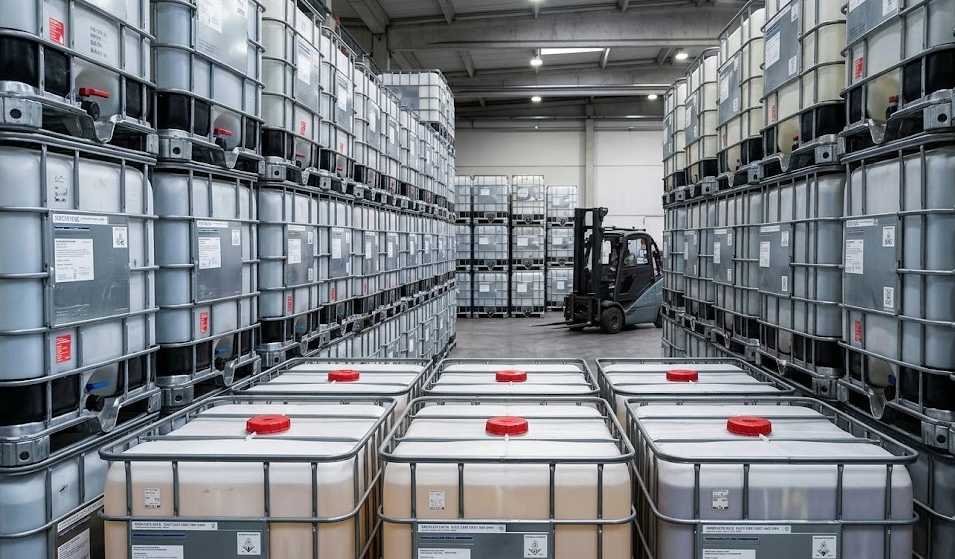
Tote families
What's on the lot right now.
Standard 275 gal
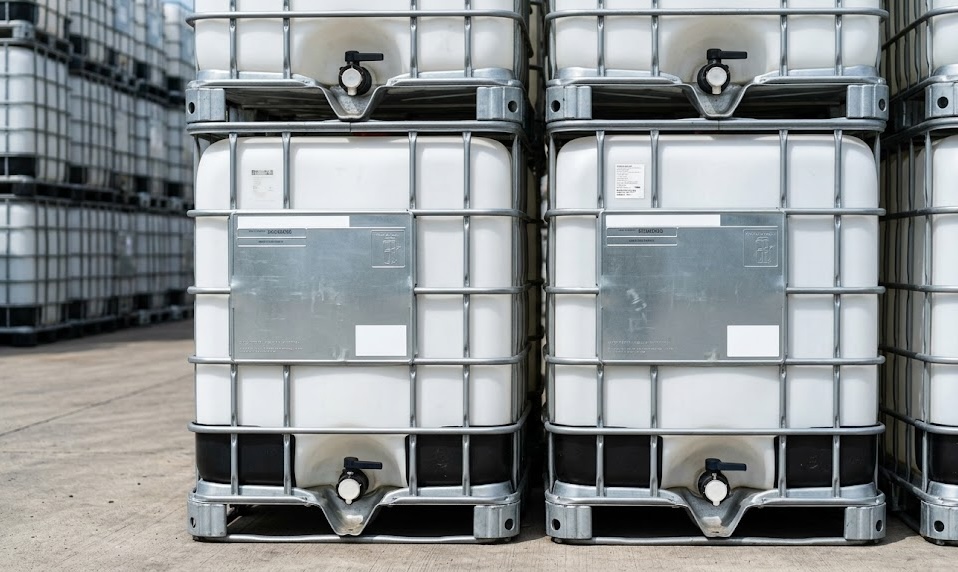
48×40×46", composite HDPE, caged. The workhorse.
Details →Food-grade
Previously held syrups, juices, oils. FDA-compliant.
Details →Rebottled
Fresh HDPE bottle inside a second-life cage.
Details →Stainless 304/316L
Chemical-rated, insulated, jacketed options.
Details →Our radical position
A tote made in 2014 and reused in 2026 is more sustainable than any new one — even a "bio-based" one.
The plastics industry loves to talk about "sustainable packaging." Most of it is virgin plastic with a green sticker. We think the most sustainable IBC is the one that already exists — and our whole yard is built around keeping it in rotation. We'd rather fix a scratched cage than manufacture a new one. We'd rather rebottle a tired HDPE interior than ship it to a landfill.
How a used tote actually moves
Yard-floor mechanics, not marketing.
- 01
Inbound
A fleet or factory calls us. We price the lot, schedule a pickup, and roll in with a drop-trailer. Your yard is empty by afternoon.
- 02
Triage
Every tote gets a chalk mark. Reconditionable, rebottle, recycle. No tote hits the landfill aisle.
- 03
Rework
Pressure wash, hot water rinse, optional caustic. Valves replaced. Cages straightened. UN labels recertified.
- 04
Outbound
Back on the road as a reconditioned tote, a rebottled food-grade unit, a rain barrel, or a bale of HDPE flake.
"We used to pay a hauler to take our empties to a transfer station. Now Charlotte IBC Totes shows up, hands us a check, and the cages go back out on the road. The math works."
"I bought four rebottled totes and rigged up a rainwater catchment for my apiary. The kids painted them. It's been two seasons and the bees are unbothered."
Before you ask
The questions we get every week.
Can I really show up with a truckload of empties and get paid?+
What's the difference between food-grade and rebottled?+
Do you deliver outside the Carolinas?+
Are your used totes safe for drinking water?+
The honest comparison
Why a used tote beats a new one — on every metric that matters.
The packaging industry wants you to believe that new equals better. Here is a side-by-side breakdown of what you actually get when you buy reconditioned vs. brand-new. Spoiler: the only thing "new" wins on is the smell of fresh plastic.
| Factor | New IBC (275 gal) | Reconditioned (A-grade) | Rebottled |
|---|---|---|---|
| Retail price (275 gal) | $380 – $520 | $85 – $195 | $275 – $390 |
| Carbon footprint | ≈ 310 kg CO₂e | ≈ 32 kg CO₂e | ≈ 120 kg CO₂e |
| Lead time | 2 – 4 weeks | Same day (yard pickup) | 3 – 5 business days |
| UN/DOT certification | Yes (factory) | Yes (A-grade) | Yes |
| Food-grade available | Yes | Yes (documented chain) | Yes (new bottle) |
| Warranty coverage | Manufacturer, 1 yr | Yard guarantee, visual | Yard guarantee + new bottle |
| Cage lifespan remaining | 10 – 15 years | 5 – 12 years | 5 – 12 years (same cage) |
| Landfill diversion | No | Yes — 137 lb diverted | Yes — cage + pallet diverted |
| Virgin plastic consumed | 42 kg HDPE | 0 kg | 42 kg (bottle only) |
| Local availability (CLT) | Ship from factory | On the lot today | Built to order, on-site |
Price ranges reflect Charlotte yard pricing as of Q2 2026. New-tote pricing based on national distributor catalogs.
How we grade every tote
The chalk marks on the cage aren't random — they're a grading system.
Every inbound tote gets triaged within 24 hours and receives a chalk code. That code determines its price, its cleaning protocol, and its next life.
Prime Reconditioned
Bottle is sound with no stress-whitening. Cage is straight with intact galvanization. Valve is replaced with new hardware. Hot-water wash, pressure test at 3 PSI for 10 min, fresh UN/DOT label. Ready for industrial or food-grade track (if previous contents qualify).
Standard Reconditioned
Bottle is clean but may show minor cosmetic marks. Cage has light dings or surface rust that don't affect structure. Original valve may remain if it passes inspection. Cleaned and leak-checked, but no UN re-label. Great for non-regulated storage, farms, and job sites.
Food-Grade Certified
Must pass every criterion for A-grade plus documented previous contents (syrups, juices, oils, etc.), our 4-stage food-safe cleaning loop, and an odor-free / stain-free visual inspection. The highest bar on the yard.
Rebottle Candidate
Cage qualifies for A-grade but the bottle doesn't — UV damage, staining, stress-crack, or unknown chemistry. The old bottle gets ground for recycling; a new virgin-HDPE bottle is seated, and the tote effectively becomes new inside.
As-Is / Project Stock
Structurally intact but cosmetically rough or previously held chemistry that limits reuse. Sold at lowest cost for fab-shop projects, rain barrels, composters, and DIY builds. Buyer cleans and inspects.
Scrap / Recycle
Bottle is cracked, cage is buckled, or both. Disassembled on-site: HDPE is ground to flake, steel is shredded, pallets are repaired or chipped. Nothing goes to a landfill.
What customers say
Real people, real yards, real totes.
"We switched from new totes to rebottled and saved $14,000 in the first quarter. Same performance, same compliance, fraction of the carbon."
"Dale inspected 120 totes in one afternoon. The man has a sixth sense for cage fatigue. Every unit arrived as described."
"I run a 600-hive apiary. Charlotte IBC Totes built me a 6-tank rain catchment array that gravity-feeds my bee yard. Two hurricane seasons and it hasn't leaked."
"They took 72 empties off our dock, wrote us a check before the trailer left, and had the dock empty by lunch. We used to pay someone else to haul them."
"I needed eight 316L stainless totes for a pharma intermediate. They found them in ten days and delivered them with full borescope reports. You can't get that from a catalog."
"My kids painted four rebottled totes for our school garden. They hold 1,100 gallons of rainwater and the art teacher turned them into a curriculum unit on sustainability."
"The rebottling line is the real deal. I watched them seat a new bottle, valve it, and pressure-test it in under 15 minutes. Better throughput than any reconditioning house I've used."
"We needed a recycling certificate for our ESG report. They sent it same-day with a per-tote breakdown. Our auditor was impressed."
Industry context
The IBC tote industry by the numbers.
The intermediate bulk container market is enormous — and growing. Here is some context on why reuse matters at scale.
Sources: Grand View Research IBC Market Report (2024), PlasticsEurope Eco-Profile for HDPE (2020), worldsteel LCI (2021).
Who we serve
Totes move through every industry. These are the ones that keep our lot turning.
Food & Beverage
Syrup blenders, juice packers, honey farms, craft breweries, vinegar producers
Specialty Chemical
Paint, coating, adhesive, and solvent blenders across the Carolinas
Agriculture
Fertilizer distributors, ag-chem, apiaries, greenhouse growers, livestock ops
Pharma & Biotech
Contract pharma, fermentation houses, buffer prep, API intermediates
Construction
Concrete admixture, curing compounds, release agents, site-water staging
Waste & Recycling
Haulers, liquid-waste processors, and recycling facilities
Craft & DIY
Rain barrels, aquaponics, hydroponics, beekeeping, off-grid living
Brewing & Distilling
Yeast prop, grain haulage, sugar syrup, cleaning chemical staging
Quick carbon math
What does buying used actually save?
Every reconditioned 275-gallon tote you buy instead of new prevents roughly 278 kg of CO₂e from being emitted. Here is how that scales — no calculator needed, just multiplication.
Equal to taking 1 car off the road for 4 months
Equal to 7 round-trip flights NYC to London
Equal to powering 3 US homes for a year
Equal to removing 30 cars from the road for a year
What's on the lot this week
Typical inventory snapshot — what you'll find when you drive up.
Our lot turns over constantly. This is a representative snapshot — not a live count. Email us for exact availability, or just stop by.
Standard 275 gal (A-grade)
from $145~80 units
Pressure-washed, tested, UN labeled. Ready to load.
Standard 275 gal (B-grade)
from $85~120 units
Cleaned, functional, minor cage wear. Best value.
Standard 330 gal (mixed)
from $95~35 units
Taller format, mixed A/B grades available.
Food-grade (documented)
from $135~25 units
Previous contents: syrups, juices, oils. 4-stage clean.
Rebottled (to order)
from $275Built in 3–5 days
New HDPE bottle, second-life cage. Order any time.
Caged steel
from $395~8 units
Supply varies. Ask about current chemistry profiles.
Stainless 304/316L
POA2–5 units
Rotating inventory. Email for current specs and photos.
Fab-ready donors
from $45~60 units
Pre-sorted by project type: rain, grow, ferment.
Accessories & parts
from $2Always stocked
Valves, caps, camlocks, gaskets, bung wrenches.
Inventory is representative and updates frequently. For exact counts, email us or visit the yard.
Shipping & logistics
Three trailers. No empty miles. Real pricing.
We run our own drop-trailers and a box truck out of the Graham Street yard. The key to our delivered pricing is route-balancing — every outbound delivery is paired with an inbound pickup on the return leg. That means lower freight cost per tote and fewer diesel miles per unit.
- Zone A (0–100 mi): Charlotte metro, Gastonia, Rock Hill, Concord — often same-day
- Zone B (100–250 mi): Raleigh, Asheville, Greenville SC, Columbia — 1–2 days
- Zone C (250–400 mi): Atlanta, Knoxville, Richmond, Wilmington — 2–3 days
- Zone D (400+ mi): Nationwide via carrier partners — quoted per load
More questions answered
Ten more things people ask us every week.
How long does a reconditioned tote actually last?+
Can I stack totes three-high in my warehouse?+
What thread type are your fill caps?+
Do you sell just the cages or just the bottles?+
Can your totes be used for diesel or gasoline?+
Do you ship internationally?+
What's the difference between a composite IBC and a rigid IBC?+
Can I return a tote if it doesn't work for my application?+
How do I know what was previously in a used tote?+
Do you offer recurring delivery schedules?+
One yard. One hundred and thirty-seven pounds of plastic and steel per tote. An infinite number of second lives.
Come by the yard at 4026 N Graham, send an email, or fill the form at the top of any page. We'll take it from there.